#022: The Hidden Cost of Open Source
Dec 03, 2022
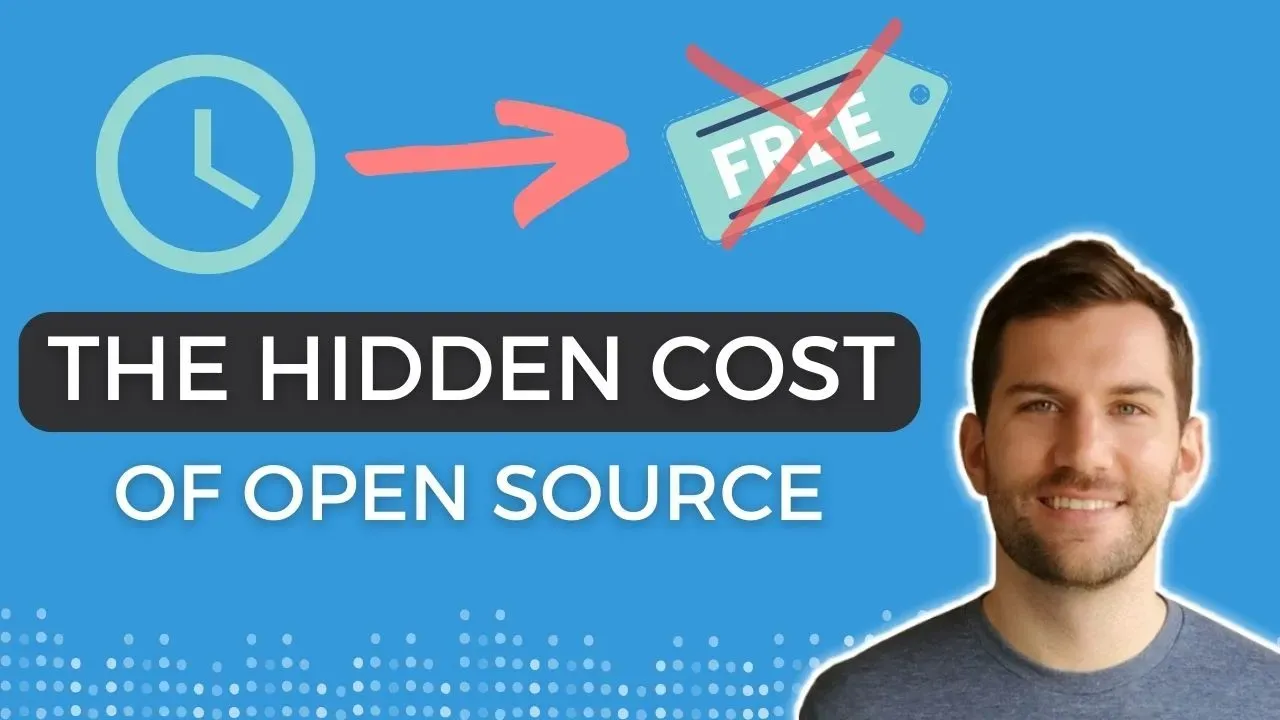
Open source tools give you complete access to the code base without paying a license fee, which is why people assume open source equals free. The license is free. The implementation is not. The biggest cost in any implementation is rarely the tool itself, and with open source it lands almost entirely on your time, in three places: the time to set the tool up inside your own infrastructure, the time to support it when something breaks, and the time to optimize it so what you built is a real design rather than something hacked together. None of that means avoid open source. I use these tools and recommend them often. It means price the hours before you commit to them.
Key takeaways
- Open source means no license fee. It does not mean no cost. The cost moves from the invoice to your calendar.
- Setup rarely goes as smoothly as the documentation suggests once you are fitting the tool to your own infrastructure.
- Dependency and environment errors are where developers quietly lose days, often going in circles rather than asking for help.
- If you build it, you maintain it. There is no vendor support team standing by when something breaks at the wrong moment.
- Support is wider than bug fixing. It includes integrating the tool with the rest of your stack and onboarding every new team member.
- Be honest about whether what you built is a customized solution or something hacked together. The two age very differently.
- Every hour spent refactoring your own infrastructure is an hour not spent building something your stakeholders asked for.
Free to license is not free to run
The appeal of open source is obvious. You get the full code base, you can read it, change it, and you pay nothing for the right to use it.
That is a genuine advantage and I am not arguing against it. The problem is the shortcut people take from there, which is that a free license means a free implementation.
The tool is only one line in the total cost. The rest of the cost is labor, and with open source you have taken on all of it yourself.
Below are the three places that labor shows up.
Hidden cost 1: time to set up
Most well known open source tools have good documentation and clear installation instructions. That is not where it goes wrong.
It goes wrong when you start running it in your own local environment and lining it up with everything else in your infrastructure.
Where setup actually breaks down
The usual culprits are not conceptual. They are plumbing.
- Dependency conflicts. Versions that disagree with each other or with something already installed.
- Environment differences. The guide assumes a setup that is not quite yours.
- Integration points. Authentication, networking and storage that have to match the rest of your stack.
All of that is expected. What is not budgeted for is how long developers go in circles on it. I have spent far too much time on exactly this myself.
Check the skill set before you commit
The tool may be free. The developer's time is not, and that is a very real cost to the business.
So before you decide to implement an open source tool, make sure the skill set is actually there and that you are prepared to take it on.
This part is binary in my experience. Setup is either an enjoyable, educational experience for the developer, or an absolute headache that drags on for weeks. Skill level is what decides which.
Hidden cost 2: time to support
Developers take real pride in building and maintaining things. That is one of the most rewarding parts of the job, and it is also the part that hides the bill.
If you built it from scratch, you maintain it. When something breaks, it is on you, and not just the business logic. The hosting and the setup are yours too.
What support actually includes
It is broader than fixing bugs:
- Troubleshooting. Diagnosing failures with no vendor support ticket to open.
- Integration. Keeping the tool wired into the rest of your stack as the stack changes.
- Customization. Making the interface and the outputs work for the people who use them.
- Onboarding. Getting every new team member set up, including all the local dependencies if the tool runs locally.
That last one surprises people. A self hosted tool with local dependencies means every new hire repeats some version of your original setup struggle.
Design for the long term
If you are going down this road, be deliberate about it. Design intentionally, write good documentation, and think in years rather than weeks.
There will always be ways to shortcut things. A short sighted decision today is one that costs real money and real time later.
Every hour spent fixing a bug in your own infrastructure is an hour not spent learning what your stakeholders actually need.
Hidden cost 3: time to optimize
The third cost is about your setup and design rather than troubleshooting. It is the work of getting the implementation genuinely right.
Here is the question worth being honest about: is what you built a customized solution, or is it something you hacked together?
Customized or hacked together
There is a real difference, and it shows up in how sustainable the thing is. A customized solution was designed. A hacked together one accumulated.
Most tools and infrastructure designs have an accepted best practice. With a paid closed source product, a lot of that is already configured for you, including the hosting.
You are not thinking about upgrades or whether a setting is correct, because somebody else owns that.
What you own when you self host
With open source or self hosted, all of it is yours:
- Hosting and upgrades
- Security measures and access control
- Configuration that matches the accepted best practice
- Backups, monitoring and recovery
And the trade is always the same. Every hour spent refactoring or perfecting that setup is an hour not spent building a new feature for your stakeholders.
When open source is the right call
None of this is an argument against open source. These tools deliver amazing value when they are used correctly, with the right team and the right infrastructure in place.
For the record, I am a big fan. I use them, I recommend them, and I would encourage you to check them out.
The conditions that make it work
The honest version of the recommendation has conditions attached:
- The skill set is already on the team. Not a skill you plan to acquire while the deadline runs.
- Someone owns it. A named person responsible for upgrades, security and support, with time allocated for it.
- The documentation exists. Written as you go, so the knowledge does not live in one person's head.
- The hours are counted. Setup, support and optimization priced at a real rate and compared against the paid alternative.
When those are true, open source is often the better deal and you get the control along with it. When they are not, you have not saved money. You have moved it somewhere nobody is looking.
Key terms
Self hosted deployment
Running a tool on infrastructure you own and operate, which means you also own its hosting, upgrades, security and uptime.
Time to set up
The developer hours spent getting an open source tool installed and working inside your specific environment, beyond what the documentation suggests.
Time to support
The ongoing hours spent troubleshooting, integrating, customizing and onboarding people onto a tool you maintain yourself.
Time to optimize
The hours spent bringing a working implementation up to an accepted best practice for design, security and hosting.
Opportunity cost
The work you did not do because you were doing something else, such as the stakeholder feature that was not built while you refactored infrastructure.
Common questions
Is open source software actually free for a data team?
The license is free. The implementation is not, because setup, support and optimization all consume paid developer hours. For a small team those hours are the scarcest resource you have, which is why open source can end up costing more than a subscription.
What is the hidden cost of open source data tools?
Time, in three forms: time to set the tool up in your infrastructure, time to support it when it breaks or when someone new joins, and time to optimize it toward a real best practice. None of those appear on an invoice, so they rarely get compared against vendor pricing.
How do I decide between self hosting and a paid managed version?
Estimate the monthly hours you will spend on setup, support and upgrades, multiply by a loaded hourly rate, and compare that to the vendor price. Then ask whether the person spending those hours has anything more valuable to do. Usually they do.
What should I have in place before adopting an open source tool?
The skill set to run it, a named owner with time allocated, a documentation habit from day one, and a long term view of the design. Without those, you are relying on one person's memory and availability.
Does buying a tool remove all of this work?
No, but it removes most of the infrastructure half. The vendor handles hosting, upgrades and baseline configuration, and gives you documentation and a support channel. You still own how the tool fits your business logic and your stack.
Related reading
- Build vs Buy: What's best for your data team?
- Common Pricing Models of Data Tools
- How to Pick Tools for a Data Stack
- Can Small Data Teams Afford a "Modern" Database?
Final takeaway
Nearly every small team I have worked with has at least one self hosted tool that was adopted to save money and is now quietly consuming a day a week. Open source is worth using. Just price the hours before you commit, and never let open source get translated into free.
Additional Free Resources
Starter Guides & Checklists
Explore additional free resources built on the same patterns I use with real clients so you can build your own with structure and confidence. Topics include data architecture, modeling and more specifically for small data teams.